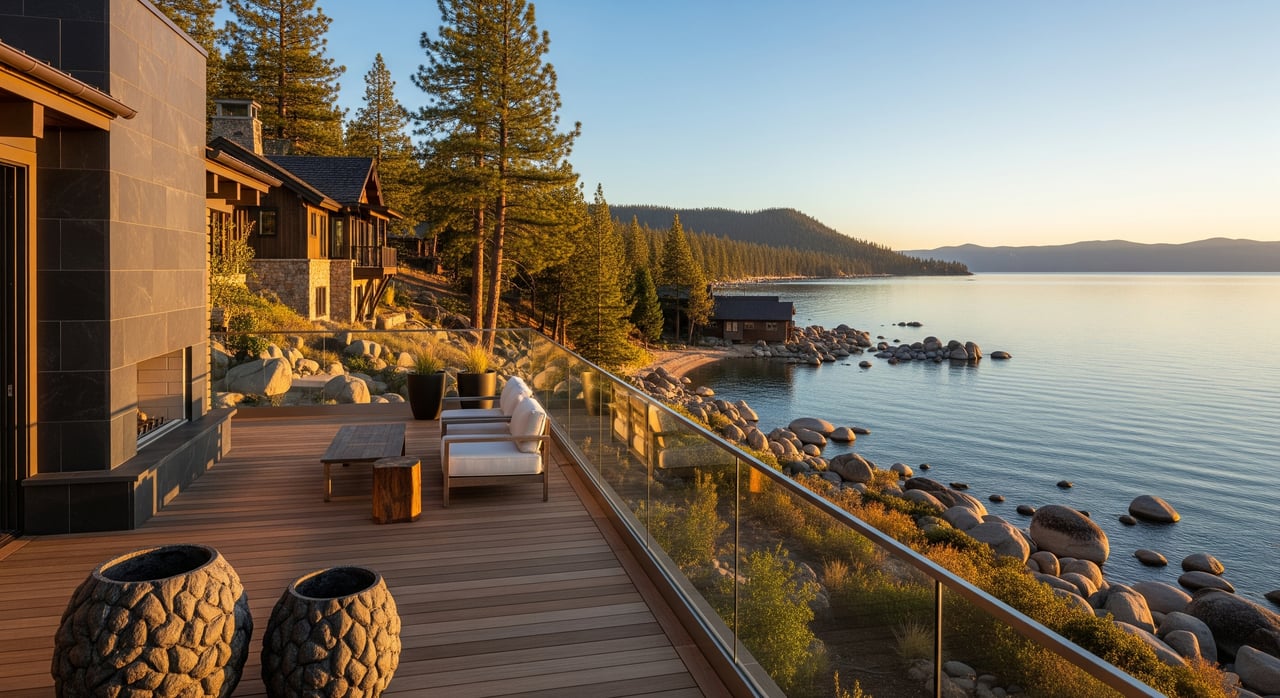
You know the magic of Meeks Bay the moment you see the water. The real question is where your money works harder: on the shoreline or a few streets uphill. Each option delivers a different blend of privacy, views, access, and long‑term value.
In this guide, you’ll get a clear framework to compare Meeks Bay lakefront and upland homes in ZIP 96150. You’ll learn which features drive pricing, how to evaluate comps, and what trade‑offs to expect so you can choose with confidence. Let’s dive in.
Meeks Bay market context
Meeks Bay sits on Lake Tahoe’s west shore with a narrow band of true waterfront parcels. That scarcity is a core reason lakefront properties command meaningful premiums over similar upland homes. The shoreline also hosts public amenities like Meeks Bay State Park, which can add convenience for some buyers and reduce perceived privacy for others.
Topography also plays a role. West‑shore lots often transition quickly from beach to forested slope, which means usable flat area is limited and parking can be tighter at the water’s edge. Slightly upland homes sometimes offer easier year‑round access and broader building envelopes. For shoreline planning background and basin context, review the Tahoe Regional Planning Agency’s shoreline program overview.
The five value drivers to prioritize
Shoreline proximity
Shoreline proximity means either direct lake frontage or being in the first row at the water compared with being one or more streets upland. True lakefront delivers non‑reproducible utility: immediate water access, potential for moorage, and immersive views. Because these parcels are scarce on the west shore, price per finished square foot is typically materially higher than upland peers.
Keep in mind that lakefront ownership may involve higher operating costs. Shoreline structures, erosion control, and specialized maintenance can increase annual spend. Weigh the lifestyle gain against ongoing costs as part of your total ownership picture.
View corridors
View quality is its own value driver. An unobstructed, panoramic lake view from an elevated upland home can approach the appeal of being right on the water for many buyers. Conversely, a near‑shore home with views blocked by vegetation or neighboring structures will not command the same premium as a property with a wide, protected view corridor.
When comparing homes, separate distance from the lake and view quality. Adjust for view first, then proximity. Full‑span, long views deserve a larger positive adjustment than a partial or seasonal view.
Lot width and usable frontage
On steep west‑shore terrain, wider parcels and deeper, flatter yards add real value. Wider shoreline frontage can support more private outdoor living, better separation from neighbors, and, where permitted, improved water access features. Narrow or steep parcels can limit design flexibility and the feel of privacy even if the address is lakefront.
When reviewing a property, verify physical dimensions and buildable area using parcel records. El Dorado County’s Assessor resources and parcel maps offer a starting point for parcel data and maps.
Privacy, orientation, and context
Privacy affects both lifestyle and price. Homes oriented directly toward the lake with generous setbacks from neighbors tend to sell at a premium. Adjacency to public beaches, parking, or a popular trailhead can increase activity and foot traffic. Some buyers value that energy and convenience, while privacy‑first buyers expect a discount in those locations.
Sightlines also matter. Tree buffers and cove settings can deliver a more secluded experience than open stretches near public access points. Orientation, setbacks, and screening are all relevant when you assess comps.
Beach and dock access
Documented beach and dock rights are significant. Deeded, private access typically carries a large positive adjustment because it delivers privacy, control, and storage for watercraft. Shared association beaches and docks still add value, though the premium is tempered by shared use and any dues. If rights are absent, buyers rely on public access and boat launches, which reduces utility.
Always confirm whether beach or dock rights transfer with the property and compare rights across comps. The nature, exclusivity, and condition of shoreline improvements can materially influence value.
How to compare properties the right way
1) Define your comparison set
Focus on a tight geography within Meeks Bay and nearby west‑shore segments in ZIP 96150. Separate your comps into three pools so you can compare like with like:
- True lakefront or littoral lots.
- First upland row (one street back from the shore).
- More distant upland streets.
Within each pool, align for home size, quality, and usable square footage before adjusting for the five value drivers.
2) Start with nearest‑neighbor pairings
Pair each target property with the most similar recent sale nearby. Note the sale price differences after controlling for basics such as beds, baths, condition, and gross living area. The remaining gap helps quantify premiums for shoreline proximity, view, and access rights.
Use a checklist when you adjust:
- View quality and protection over time.
- Deeded private beach or dock rights versus none.
- Lot width, depth, and buildable flat area.
- Privacy level and adjacency to public amenities or busy roadways.
- Parking, driveway access, and winter practicality.
- Condition and permitting context of docks or retaining structures.
3) Account for recurring costs
Higher annual costs can influence what buyers are willing to pay. Lakefront often includes dock upkeep, shoreline stabilization, landscape maintenance, and potentially different insurance needs. For association beaches, include dues or assessments. Investors should translate these into pro formas so apples‑to‑apples comparisons reflect net carry.
For statewide market context that can shape buyer demand, the California Association of REALTORS offers market data and insights. Pair general trends with local MLS comps for the most accurate pricing decisions.
4) Quantify premiums conservatively
Avoid generic percentage claims. The most persuasive approach in Meeks Bay is to show two recent, anonymized sales in the same micro‑area, one lakefront and one upland, then illustrate the difference after your adjustments. Use price per square foot alongside total price to capture both scale and efficiency.
If you need parcel specifics to evaluate frontage and shape, consult the El Dorado County Assessor’s property information to confirm dimensions before relying on satellite imagery.
Buyer profiles and trade‑offs
- Lifestyle‑first lakefront buyer. You prioritize private shoreline, effortless water access, and prestige. You accept higher maintenance and operating costs in exchange for a one‑of‑a‑kind experience.
- View‑focused upland buyer. You want dramatic, unobstructed vistas and a larger, more usable yard at a lower price point. You value easier parking and access, even if you give up direct water frontage.
- Value‑seeking purchaser. You aim for more square footage and outdoor space per dollar on upland streets and prefer simpler, lower recurring costs.
- Rental‑minded investor. You evaluate nightly rate potential for lakefront against seasonality, upkeep, and management overhead. If short‑term rentals are part of your plan, analyze realistic occupancy in each location.
Ownership costs to model up front
Create a total cost of ownership view for each candidate home. On the lake, include seasonal dock work, shoreline and erosion control, tree work, and potential insurance differences. For some upland homes, snow management and access can still be a factor, but often at a lower scale than at the water’s edge.
Investors should compare net operating income after all expenses. Lakefronts can earn higher nightly rates but may face sharper seasonality and higher fixed costs. Sensitivity‑test your model to see how small changes in occupancy affect returns.
What to verify before you write an offer
Use this targeted checklist to reduce surprises and firm up your valuation view:
- Recent closed sales in the same Meeks Bay shore segment for both lakefront and the nearest upland streets (12–24 months).
- Parcel width, depth, and shoreline frontage from assessor maps.
- Deeded private beach or dock rights, or shared association access with fee schedule.
- Condition and documented status of shoreline improvements like docks or retaining walls.
- Parking, driveway design, and winter plow access.
- View corridor details and risk of future view loss from vegetation or neighboring build‑out.
- Annual recurring costs tied to shoreline or HOA ownership and any special assessments.
- If applicable, comparable short‑term rental performance and realistic seasonality.
For basin‑level shoreline context and planning background, consult TRPA’s shoreline resources. For parcel‑level verification, start with the county’s Assessor portal and follow with title documents.
Putting it together: a simple decision path
- If private shoreline access is your top priority, focus on lakefront and weigh higher maintenance into your budget. Confirm beach and dock rights early.
- If panoramic views and easier access matter more than touching the water, prioritize first and second upland rows with protected view corridors.
- If you want more home and yard for your dollar, compare upland options where lot width and buildable area increase livability.
- For investment, underwrite both nightly rate potential and cost intensity. Let net returns, not just top‑line rates, guide your choice.
When you approach Meeks Bay this way, you compare lifestyle and value on equal footing. That leads to sharper offers, smoother negotiations, and a home that fits how you actually live at the lake.
Ready to evaluate a specific property in Meeks Bay or assemble a custom comp set for 96150? Reach out for a confidential, appraisal‑informed pricing strategy with Gregory Ochoa and the Mountain Luxury Properties team.
FAQs
How much more do Meeks Bay lakefront homes cost than upland options?
- Lakefront sells at a meaningful premium due to scarcity and unique shoreline utility. The reliable way to quantify it is through nearby pairwise comps from the local MLS that control for size and quality.
Are panoramic upland views as valuable as being on the water in Meeks Bay?
- A dramatic, unobstructed view from higher elevation can approach the appeal of lakefront for some buyers, but deeded private shoreline access adds utility that many will pay extra for.
What hidden costs should I expect with Meeks Bay lakefront ownership?
- Expect higher maintenance for docks and shoreline features, potential differences in insurance, ongoing landscaping, and possible HOA or shared‑beach fees where applicable.
How do public amenities near Meeks Bay State Park affect value?
- Proximity to public beaches and trailheads adds convenience and rental appeal for some buyers, while privacy‑focused buyers may apply a discount due to increased seasonal activity.
What documents verify beach or dock rights for a Meeks Bay property?
- Confirm via title documents and recorded deeds, then cross‑check parcel details with the El Dorado County Assessor; rights and the condition of improvements should be reflected in your comp adjustments.