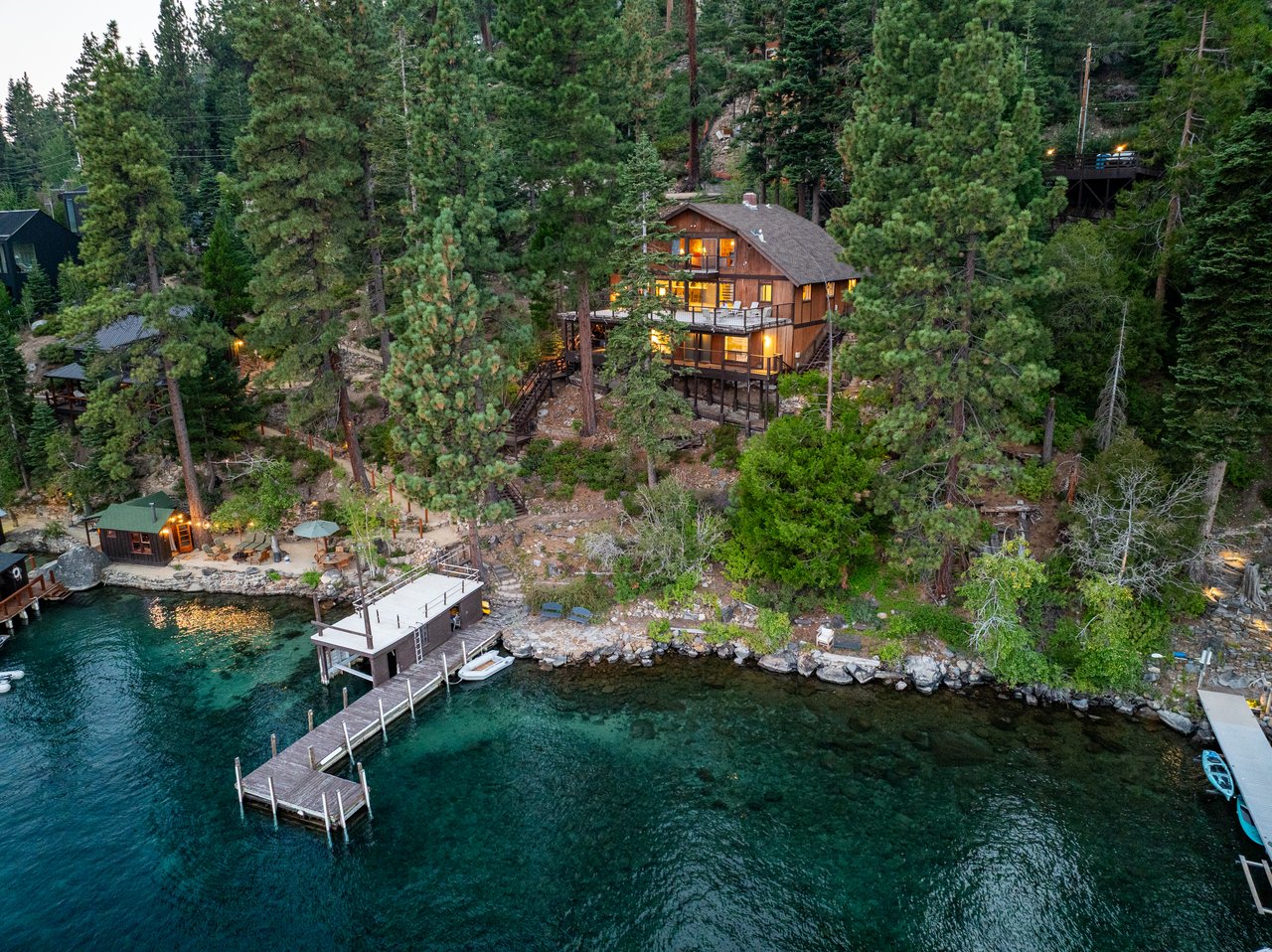
You already know lakefront is scarce in Meeks Bay. What many buyers and investors miss is how a private pier or buoy can compound your returns, both in nightly rates and at resale. If you want to model ROI with confidence, you need to understand the rules that govern moorage and the pathways that turn water access into measurable premiums.
This guide breaks down how piers and buoys drive value in Meeks Bay, what to verify with local agencies, and a practical checklist you can use to score opportunities. Let’s dive in.
Why piers and buoys matter in Meeks Bay
A private pier or buoy changes how guests use the property and how buyers perceive it. In Meeks Bay, shorezone structures are constrained by environmental rules and permit limits. That scarcity fuels both booking premiums and buyer competition when rights are documented and transferable.
For short-term rentals, guaranteed moorage removes friction for boaters, boosts discoverability on booking platforms, and often improves length of stay. For resale, documented rights can widen the buyer pool and lift price per square foot compared to similar waterfront without moorage.
The regulatory landscape to check first
Who regulates piers and buoys
Multiple agencies shape what is allowed along Lake Tahoe’s shorezone:
- Tahoe Regional Planning Agency (TRPA) manages shorezone permitting and environmental thresholds for structures like piers and docks.
- El Dorado County oversees local permitting, records, and any buoy program administration relevant to Meeks Bay parcels.
- California Department of Boating and Waterways provides state guidance tied to moorings and marine facilities.
- Federal permits can apply for certain in-lake work through the U.S. Army Corps of Engineers, depending on footprint and impacts.
Why scarcity and transferability shape value
- New shorezone structures are limited. This caps supply, making existing, documented rights more valuable.
- Permit transfer rules matter. Some permits are tied to a parcel and transfer at sale. Others require formal steps, fees, and mitigation. Transfer friction and uncertainty reduce present value.
- Seasonal and environmental windows govern in-water work. Limited timing increases costs and stretches project timelines.
Buoy lotteries and waitlists
Where authorities cap buoy allocations, availability may run through a lottery or waitlist. The ratio of available buoys to applicants becomes a practical probability for near-term moorage. If a property lacks current rights, those odds directly affect how soon you can realize any nightly-rate uplift.
Nightly-rate premiums: how they happen
Direct amenity premium
Private moorage enhances the waterfront experience and removes logistics like trailering and public launches. Guests often pay more for that certainty, especially in peak season. The result can be a higher average daily rate and better booking velocity when demand surges.
Marketing and occupancy lift
Listings with “private pier” or “private buoy” typically stand out in amenity filters. That differentiation can support higher occupancy on peak weekends and extend shoulder-season demand. Better guest experiences also improve reviews, which feed back into ranking and conversion.
Ancillary revenue and length of stay
When guests can secure their boat on-site, they are more likely to book longer stays and add services or experiences. That increases revenue per booking without adding major operating complexity, provided your house rules and insurance address moorage use.
Resale premiums: what buyers pay for
Documented rights vs de facto use
Buyers value certainty. Properties with recorded, transferable pier or buoy rights typically command higher prices than similar parcels that rely on informal access. Documentation through county records and permit files is central to defending value.
Risk discounts and conditions
Conditional rights, limited permit life, or pending mitigation can trigger buyer discounts. Storm damage risk, insurance requirements, and any transfer fees also factor into what a prudent buyer will pay. Clear documentation and recent maintenance records help preserve the multiple.
Costs and risks to model early
- One-time fees: permit transfers, required mitigation, and any agency processing costs.
- Recurring expenses: buoy lease fees if applicable, annual inspections, maintenance, winterization, and higher insurance premiums.
- Capital exposure: repairs after storms or wave action, replacements over time, and costs tied to environmental compliance.
- Removal obligations: some permits include end-of-term conditions or requirements at transfer that affect net proceeds.
How to quantify premiums in Meeks Bay
Data sources to pull
- Short-term rental analytics for ADR, occupancy, and amenity effects using platforms that track listing-level data.
- El Dorado County Assessor and Recorder for sales history and recorded permits tied to parcels.
- MLS comparables that distinguish between waterfront with and without documented moorage.
- TRPA and El Dorado County buoy program records for existing pier/buoy counts, transfer rules, and any lottery or waitlist details.
- Local contractors, marinas, and insurance brokers for maintenance and risk pricing.
Key metrics to calculate
- ADR premium: the rate difference for comparable Meeks Bay listings with private moorage versus those without, controlling for size and proximity.
- Occupancy differential: seasonal uplift with moorage compared to similar non-moorage properties.
- Revenue per available night: a clean apples-to-apples view that blends rate and occupancy.
- Comparable sale price delta: the documented premium for recorded moorage rights in recent closed sales.
- Buoy inventory vs waitlist ratio: a simple proxy for probability in the next allocation cycle.
- Permit transferability score: transferable, conditional, or non-transferable.
- Annual and capital costs: realistic, local estimates for ongoing operations and replacements.
Estimating buoy lottery odds
- Request current counts for total buoys and the active waitlist or applicant pool.
- Compute simple odds by dividing expected annual allocations by the number of applicants.
- If priorities exist for certain ownership categories, adjust your estimate accordingly.
- Use multiple scenarios to reflect variability from year to year.
A practical workflow for due diligence
- Identify a target property list with shoreline maps and parcel data.
- Pull 12 to 36 months of STR performance on comparable Meeks Bay listings, tagging those with private pier or buoy in the amenity set.
- Build a clean comp set from MLS and county records that isolates documented moorage rights.
- Request TRPA and county permit files for each target parcel to confirm status and transfer conditions.
- Obtain maintenance, insurance, and capital cost quotes from local providers.
- Model incremental revenue and an exit premium under best, likely, and conservative regulatory outcomes.
- Stress-test the model against higher insurance, delayed buoy allocation, and storm repair events.
Investor checklist: rank Meeks Bay opportunities
Use this checklist to score each property, then apply weights aligned to your strategy.
A. Legal status and transferability
- Is there a recorded pier permit or buoy allocation tied to the parcel? Confirm documentation.
- Is the permit transferable at sale? Unrestricted, conditional, or non-transferable.
- Remaining permit life and renewal steps. Note any imminent expirations.
- Encumbrances, mitigation obligations, or enforcement actions on file.
B. Supply scarcity and lottery position
- Current buoy and pier counts for Meeks Bay relative to demand.
- Waitlist size and recent lottery results.
- Probability and timeline to obtain a buoy if none exists today.
C. Market uplift potential
- Observed ADR premium for similar Meeks Bay STRs with moorage.
- Occupancy uplift across peak and shoulder seasons.
- Exclusivity of use: private, shared, or HOA-managed access.
- Expected annual incremental revenue across conservative, median, and optimistic cases.
D. Cost and capital exposure
- One-time transfer or permitting costs and mitigation.
- Annual maintenance, buoy fees, and insurance uplift.
- Replacement timeline and cost for pier, pilings, and buoy gear.
- Seasonal limits that raise maintenance complexity or cost.
E. Physical suitability and guest experience
- Shoreline type, slope, and water depth at mooring.
- Condition of pier/buoy and evidence of recent repairs.
- Safe, practical access from home to shore, with lighting and wayfinding.
- Parking and launching logistics for guests.
F. Resale and liquidity
- Sale-price premium in recent comps for documented moorage.
- Size of the buyer pool seeking immediate lake access in Meeks Bay.
- Likelihood future buyers require documented rights for their use case.
G. Regulatory and environmental risk
- Pending TRPA or county policy changes that affect shorezone rights.
- Environmental constraints like habitat protections or erosion issues.
- Liability profile, including any shared easements or HOA rules.
Put it together with a scoring model
Give each section a score and apply weights that match your goals. A simple example is to emphasize legal certainty and income growth potential while still accounting for costs and scarcity:
- Legal status and transferability: 25%
- Market uplift potential: 25%
- Costs and capital exposure: 15%
- Scarcity and lottery position: 15%
- Physical suitability: 10%
- Resale and liquidity: 10%
Use sensitivity analysis for the three biggest swing factors in Meeks Bay: ADR and occupancy uplift with moorage, probability of buoy allocation or permit transfer, and annual maintenance and insurance costs. The goal is not to be perfect. It is to compare deals consistently so you can allocate capital to the properties with the most resilient upside.
Ready to evaluate a specific Meeks Bay property and want discreet, appraisal-informed guidance on permits, comps, and revenue modeling? Schedule time with our team at Unknown Company to build a tailored acquisition or exit plan.
FAQs
How piers and buoys affect Meeks Bay nightly rates
- Private moorage typically supports higher average daily rates and stronger peak-season occupancy by improving guest experience and discoverability. Quantify uplift with local STR analytics that compare similar listings with and without moorage.
Adding a pier or buoy in Meeks Bay if one does not exist
- It may be possible, but issuance is constrained and requires TRPA and county review. Check current rules, buoy program availability, and any lottery procedures before underwriting improvements.
Transferability of pier and buoy permits at resale
- Some permits transfer, others are conditional or do not transfer. Verify the recorded permit language and county files, and confirm requirements with title and local agencies before marketing or valuation.
Typical annual costs for private moorage in Meeks Bay
- Expect ongoing maintenance, buoy lease fees if applicable, seasonal care, and higher insurance premiums. Get current quotes from local contractors and insurers to avoid underestimating expenses.
How buoy lottery odds influence near-term revenue
- If you need a buoy to unlock moorage-driven premiums, the odds and timing of a lottery win directly affect the present value of those future revenues. Use current inventory, waitlist size, and award history to estimate probability and expected wait time.
Major risks to value from piers and buoys in Lake Tahoe
- Regulatory changes, non-transferable permits, enforcement or remediation orders, storm damage, and insurance cost increases are the key risks. Model downside scenarios and confirm documentation to protect your basis.