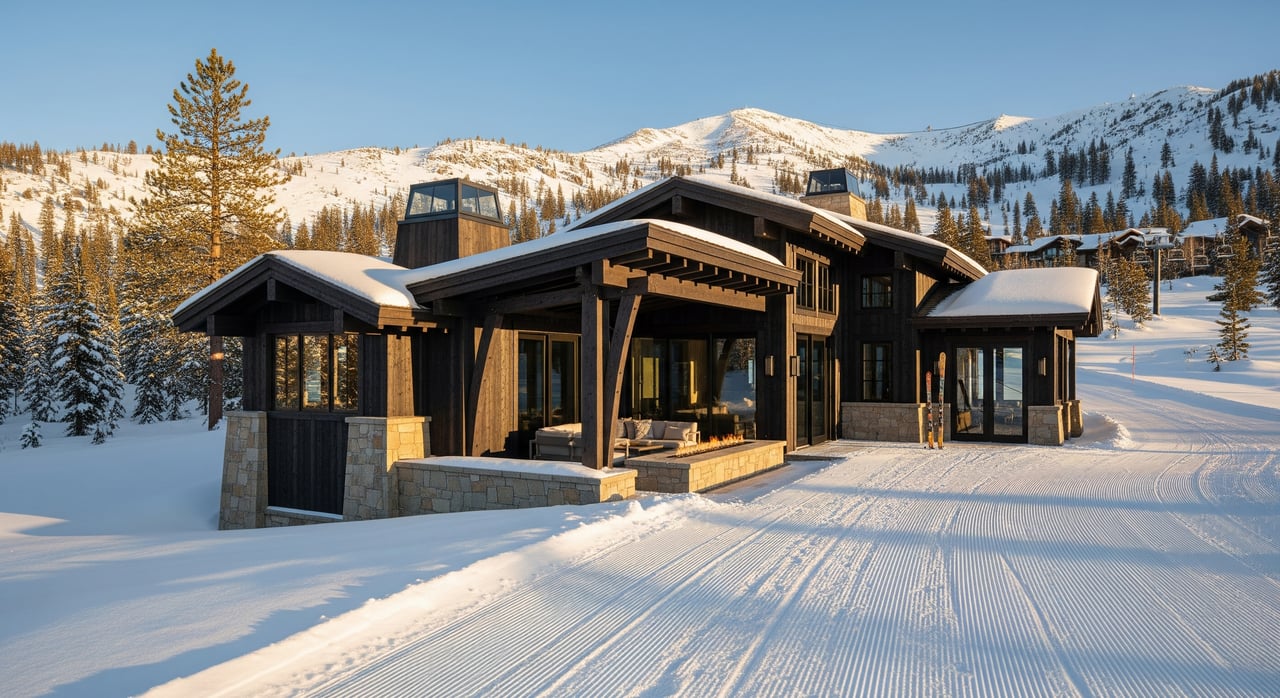
Picture this: you click into your skis on the front porch, slide onto a groomed trail, and cruise to the first chair. Or maybe you enjoy a quiet morning, sip coffee in the sun, then stroll ten minutes to the lift. If you are exploring Kirkwood and the wider Tahoe market, deciding between true ski-in/ski-out and walk-to-lift homes shapes your lifestyle, budget, and resale outlook. This guide breaks down what each option really means in Kirkwood, how local factors affect value, and the due diligence steps that help you buy with confidence. Let’s dive in.
What “ski-in/ski-out” means in Kirkwood
When you see true ski-in/ski-out, it should mean you can leave your home or building common area, step into skis, and access a maintained run without crossing a road or walking a meaningful distance. You should also be able to ski back to the property the same way. In an ideal case, recorded easements or resort rights of way support this access.
Not every marketing claim is deeded, and seasonal realities matter. A route that works after a storm may not be maintained late in the season or in low-snow years. During due diligence, verify easements, check HOA documents for who maintains ski paths, and compare those details with resort trail and grooming maps.
What “walk-to-lift” really offers
A walk-to-lift home typically puts you within a 5 to 20 minute walk to a chair, gondola, or base area. The route may include groomed pedestrian paths or plowed roads, and some HOAs operate shuttles. You get quick access without the top-tier price of true ski-in/ski-out.
The tradeoff is convenience that depends on conditions. Icy mornings, deep snow on sidewalks, and gear-carrying with kids can stretch a short walk. Exact routes, winter maintenance plans, and shuttle schedules are worth confirming before you buy.
Kirkwood factors that shape value
Snow reliability and terrain
Kirkwood Mountain Resort sits at higher elevation than many Tahoe resorts, and it is known for relatively high snowfall and terrain that appeals to advanced skiers. Buyers who prioritize consistent winter coverage often rate this highly, because sustained snow can extend practical ski access.
Remoteness and access
Kirkwood is more remote than places like Heavenly or Northstar. You will drive mountain highways that can require chains and bring slower travel in storms. That remoteness is part of the charm, yet it puts a premium on properties that reduce daily logistics once you arrive.
Seasonality and village scale
Compared with larger Tahoe base areas, Kirkwood has less adjacent development and a quieter village environment. Many owners are second‑home users, and inventory is limited. This dynamic tends to increase demand for scarce property types, including true ski-in/ski-out, while walk-to-lift homes may offer a broader selection and stronger year-round livability.
Value drivers buyers pay for
Documented access and proximity
Deeded or recorded slope access is powerful. It gives you certainty and can support valuation during appraisal. The closer and more direct the route to a lift or groomed trail, the higher the perceived convenience and market appeal.
Terrain served and lift quality
Access that feeds desirable terrain or higher‑capacity lifts is often more valuable to avid skiers. If a property lets you start the day near favorite runs, that experiential edge can influence both enjoyment and resale.
Livability and on-site amenities
Year-round utility matters. Features like heated entries, ski storage, boot rooms, covered parking, and hot tubs elevate daily use and rental appeal. HOA amenities — shuttles, maintained paths, owner services, or pools — can help walk-to-lift properties compete with ski-in options by narrowing the convenience gap.
Secondary drivers to weigh
- Views, privacy, and solar exposure
- Parking count and covered options
- Layouts that host groups well, such as bunk rooms and multiple baths
- Mountain-grade systems and condition, including insulation, heating, and snow-load readiness
Pros and cons at a glance
Pros of true ski-in/ski-out
- Maximum on-snow convenience and strong appeal to passionate skiers
- Potential resale advantage in ski-demand segments
- Less reliance on vehicles during ski days
Cons of true ski-in/ski-out
- Higher purchase price, with potential for higher taxes, insurance, or HOA dues
- Possible noise near lift lines or base areas
- Exposure to grooming and slope operation decisions
Pros of walk-to-lift
- Larger selection and typically lower price per square foot
- Often quieter settings, better sunlight, and more year-round comfort
- HOA shuttles and maintained paths can reduce the distance impact
Cons of walk-to-lift
- Routes vary with weather, plowing, and ice
- Less instant convenience for families or groups with gear
- Expectations must be precise to avoid disappointment
Due diligence checklist
- Easements and plats: request recorded easements or right-of-way documents and verify how access is guaranteed.
- HOA documents: review CC&Rs and maintenance responsibilities for paths, grooming, snow removal, and heated walkways.
- Practical winter access: walk the route in-season when possible and review dated winter photos showing the exact path.
- Resort operations: understand grooming policies, lift hours, and typical seasonal patterns that affect real-world access.
- Insurance and hazards: check fire hazard maps and clarify insurance availability and cost for wildfire risk in Alpine County.
- HOA financial health: study reserve reports and budgets, especially if HOA maintains paths, shuttles, or heated surfaces.
- Local rules: confirm short‑term rental regulations and permits if rental income is part of your plan.
Resale and liquidity in Kirkwood
In a second‑home market with limited inventory, true ski-in/ski-out often commands a premium and can attract motivated buyers during peak seasons. The magnitude of that premium varies by recent comparable sales, building quality, and exact access. Another factor is the transferability of ski access. Deeded easements tied to a parcel are generally safer than access granted by policy that could change.
Liquidity also depends on season. Ski-focused buyers often act in winter and spring. In the off-season, broader appeal features like sunlight, views, and functional outdoor space help carry demand. For condos and townhomes, HOA stability and reserves can influence buyer confidence and pricing.
Which option fits your lifestyle
Choose true ski-in/ski-out if you want maximum time on snow, have gear-heavy routines or children in lessons, and prioritize convenience above all else. The price premium may be worthwhile if you ski often and plan to hold long term.
Pick walk-to-lift if you want a wider set of properties to choose from, value quieter settings and sunlight, or favor more space and amenities at a given budget. A well-located walk-to-lift home with maintained paths or an efficient shuttle can deliver strong day-to-day ease without the top-tier pricing.
If you are considering rental use, confirm local short‑term rental rules first. In either case, match the property’s access, layout, parking, and storage to your actual use patterns rather than marketing language alone.
Smart next steps
- Define the non-negotiables: distance to lift, parking type, storage, and noise tolerance.
- Map the route: identify the exact lift or trail and test the walk or ski path in winter conditions when possible.
- Verify access in writing: secure recorded easements and maintenance obligations in HOA documents.
- Compare recent comps: evaluate sales with documented ski access against nearby walk-to units, adjusting for size, view, parking, and condition.
- Assess year-round livability: check sunlight, mudroom function, heating systems, and HOA services that simplify winter and summer use.
Ready to narrow your search to the homes that truly fit? Connect for appraisal‑informed guidance and a curated plan to evaluate access, amenities, and value. Book a Private Consultation with Gregory Ochoa.
FAQs
What does “true ski-in/ski-out” mean in Kirkwood?
- It means you can leave your home or building, click into skis, and access a maintained run without walking across roads or lots, and you can ski back the same way.
How close is a “walk-to-lift” home in Kirkwood in winter?
- Walk-to-lift typically means a 5 to 20 minute walk to a lift or base area, but actual time depends on snow, ice, plowing, and the route your HOA maintains.
Are HOA shuttles a good substitute for ski-in access in Kirkwood?
- A reliable shuttle can narrow the convenience gap, especially for families with gear, but it is not the same as stepping onto skis at your door.
How does Kirkwood’s snow reliability affect value?
- Higher elevation and relatively strong snowfall can extend practical access and appeal to avid skiers, which supports demand for both ski-in and well-situated walk-to homes.
What risks and carrying costs should I consider in Alpine County?
- Factor wildfire exposure, insurance availability and cost, winter road conditions, and HOA dues for services like snow removal, path maintenance, and shuttles.
How do I verify deeded ski access before buying in Kirkwood?
- Request recorded easements or plats, review HOA CC&Rs for maintenance obligations, and confirm practical access with winter site visits and dated photos.